
Taking Photos at Camp North End: Rules and Shoot Planning
Planning portraits or a casual photo walk at Camp North End? Learn when approval is required, what to ask, and how to photograph without blocking access.
By North End Charlotte Living Editors · Published October 18, 2026 · Updated October 18, 2026
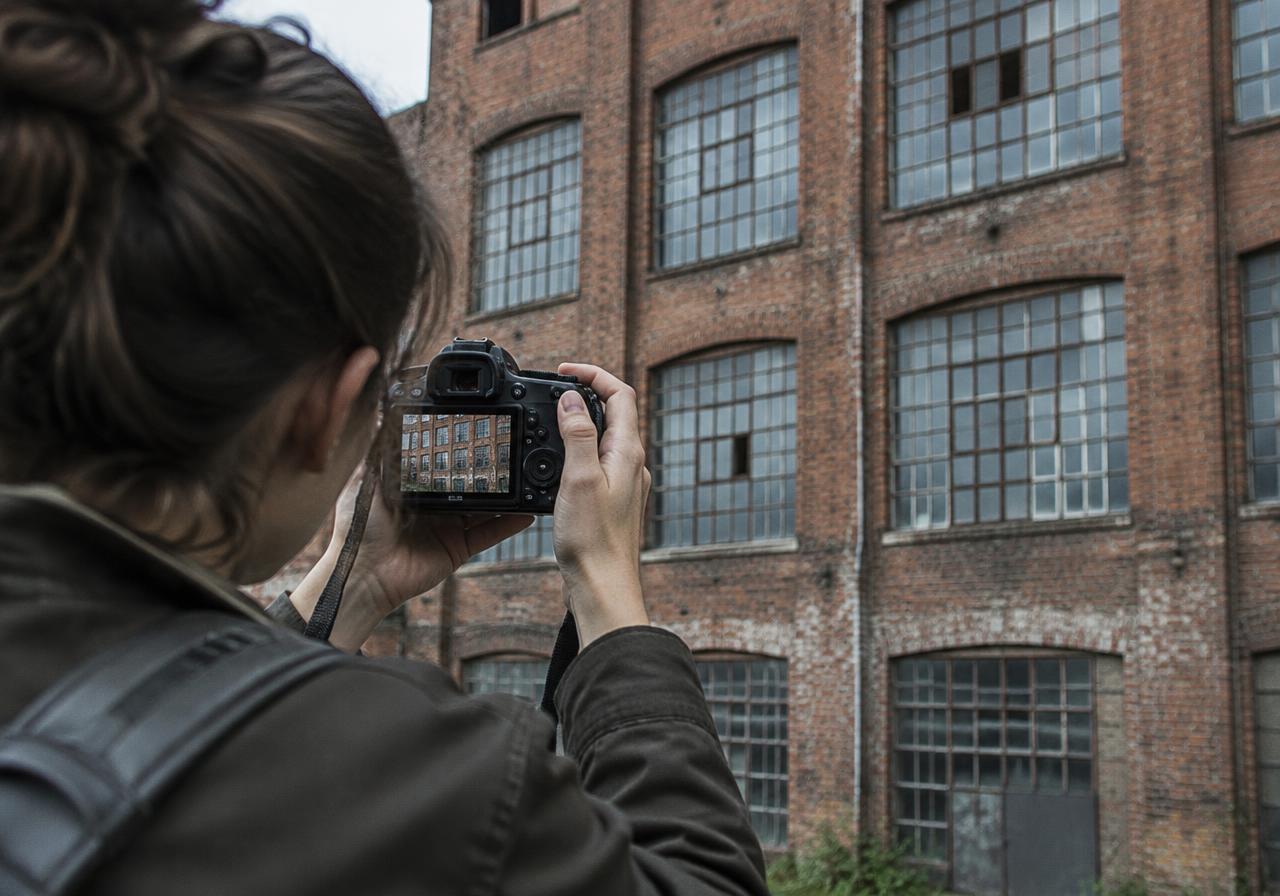
Can you take photos at Camp North End?
Yes. Camp North End encourages personal photography and casual content creation. Professional photo shoots and commercial filming require prior approval, however, and photography pop-ups that directly compete with tenants are not allowed. Visitors taking pictures must avoid disrupting businesses, blocking entrances, or interfering with traffic. Those distinctions come directly from the campus’s photography policy. ([camp.nc](https://camp.nc/about/faqs/))
For a casual photo walk, the starting point is consideration for other visitors. For engagement portraits, family sessions, headshots, or brand content, settle the approval question before committing to the location. The guide below separates the published rules from practical planning suggestions; it does not treat an attractive backdrop as permission to stage a shoot.
Distinguish a casual visit from an organized shoot
The published FAQ distinguishes personal photography from professional shoots, but it does not provide a detailed test based on camera type, crew size, payment, or equipment. Do not assume that using a phone makes a business project casual, or that a large camera automatically makes a personal outing professional. Ask about your actual plans when the category is unclear. ([camp.nc](https://camp.nc/about/faqs/))
As a planning exercise, describe what you intend to do in one sentence: take snapshots while exploring, meet a hired portrait photographer, produce product images, or film promotional material. That description is more useful in an inquiry than simply asking whether cameras are allowed.
For a session with a professional photographer, make confirming campus approval part of the booking conversation rather than an arrival-day task.
Request approval with enough detail to get a useful answer
Camp North End directs photography inquiries to info@camp.nc. Its FAQ does not publish a photography approval fee or a turnaround time, so leave room in your schedule for a response rather than assuming either immediate approval or a particular cost. ([camp.nc](https://camp.nc/about/faqs/))
A useful first message should explain the project rather than ask a vague yes-or-no question. Consider including the following details; this is a suggested inquiry checklist, not a list of published application requirements.
- Purpose: personal portraits, editorial images, promotional content, or another clearly described use.
- Preferred date, approximate start and finish, and a possible alternative.
- Number of participants, including the photographer, assistants, and anyone appearing on camera.
- Equipment and setup, especially lights, stands, props, clothing changes, or audio recording.
- Requested locations, with reference images if you have them, and whether you want to enter a business.
- Questions about any applicable fees, location restrictions, weather changes, and the scope of approval.
Build a flexible shot list around art
Camp North End’s official art directory lists artists including Georgie Nakima, Rosalia Torres-Weiner, and a collaboration credited to Shepard Fairey, Matt Hooker, and Chris Nichol. Use that directory as a starting point for researching artwork rather than relying only on an unlabeled photo saved from social media. ([camp.nc](https://camp.nc/visit/art/))
Choose a few visual approaches instead of making one exact backdrop essential: a portrait with artwork in the wider frame, a closer composition, and a simple alternative if the preferred spot is occupied. Save the artist’s name with your reference image so you can check attribution before sharing.
For promotional work featuring an artwork prominently, include that intended use in your inquiry. Do not assume a location approval answers every question about how the finished image will be used.
Choose timing around the actual visit, not a promised quiet hour
Camp North End’s visit page warns that business hours vary and directs visitors to its directory for details. If your plan includes a shop interior, a coffee stop, or another business-dependent setting, verify that business’s hours separately. A general campus visit is not a promise that a particular door will be open. ([camp.nc](https://camp.nc/visit/))
Before settling on a date, review the event calendar and ask whether your intended location has any relevant restrictions. Do not build the plan around an unverified claim that a certain weekday is always empty.
Discuss light and weather with your photographer, then agree on a fallback: a shorter session, another approved location, or rescheduling. Avoid choosing an indoor business as a rain backup without asking that business first.
Keep the setup out of other people’s way
The campus rule against obstructing entrances and traffic should shape the photograph, not become something to work around after equipment is unpacked. ([camp.nc](https://camp.nc/about/faqs/))
As practical etiquette, keep bags with your group, pause when people need to pass, and change your camera angle rather than asking strangers to clear a shared space. Before putting down a stand or prop, consider the entire setup: subject, photographer, equipment, and the space between them.
Ask permission before making an identifiable stranger the subject of a portrait. For children in your own group, choose a meeting point and keep an adult responsible for supervision rather than assuming the photographer can manage both jobs. These are planning suggestions, not additional campus rules.
Make a short, workable arrival plan
Keep the logistics proportionate to the session. Agree on one meeting point, share contact details, and decide who will communicate if someone is delayed. If changing outfits matters, work out that arrangement beforehand rather than assuming a suitable space will be available.
Pack only what supports the planned photographs. A smaller kit, a short shot list, and an agreed finish time are useful goals when you want to avoid turning a portrait outing into a lengthy production.
Use the getting-here and parking-and-accessibility guides linked below for the next planning step. If anyone needs a specific access arrangement, confirm the route and intended shooting location before making that spot essential.
Common questions before you bring a camera
Do professional family or engagement photos need approval? Yes: the published rule requires prior approval for professional photo shoots. The personal significance of the pictures does not create a stated exception. ([camp.nc](https://camp.nc/about/faqs/))
Can I offer mini-sessions to multiple clients? Ask before advertising. The FAQ expressly prohibits photography pop-ups that directly compete with tenants; do not interpret general permission for personal photos as permission to operate a pop-up. ([camp.nc](https://camp.nc/about/faqs/))
Are tripods, lighting stands, or drones covered? The FAQ’s photography section does not spell out equipment-specific permissions. Describe what you want to bring and request a clear answer rather than treating silence as approval. ([camp.nc](https://camp.nc/about/faqs/))
What is the simplest preparation? Classify the session, request approval when required, confirm your intended locations, and keep an alternative composition ready. That approach puts permission and consideration ahead of the shot list.
Next steps
- Research public art before building your photo shot list
- Check events before choosing a session date
- Find businesses to contact about hours and interior photography
- Plan how your photography group will arrive
- Review parking and accessibility before selecting a meeting point
Sources
- Camp North End FAQ: photography policy and approval inquiries
- Camp North End official art directory
- Camp North End visitor information: business-hour guidance
Continue exploring nearby: NoDa (opens in a new tab), Uptown (opens in a new tab) and Plaza Midwood (opens in a new tab) each have a dedicated guide in our network, and Charlotte Luxe Living (opens in a new tab) covers dining and weekends across the city.
This article contains no firsthand reviews. Spot an error? Send a correction.
More from the Journal
Visitor Guides
Camp North End, Charlotte: A Complete First-Time Visitor Guide
How the campus works, what to check before you go, and a simple plan for a first visit.

Visitor Guides
Camp North End vs. Optimist Hall: Understanding the Difference
Two reused industrial sites, two neighborhoods, two very different visits.

History
From Ford Factory to Creative Campus: Camp North End’s Industrial History
Model Ts, an Army depot, a missile plant, a pharmacy warehouse — and what remains.
The North End Edit
Verified local discoveries, in your inbox.