
From Ford Factory to Creative Campus: Camp North End’s Industrial History
Model Ts, an Army depot, a missile plant, a pharmacy warehouse — and what remains.
By North End Charlotte Living Editors · Published October 18, 2026 · Updated October 18, 2026

1924: Ford arrives
According to the campus operator, Albert Kahn — the Detroit architect behind many of Ford's daylight factories — designed the site's first building for the Ford Motor Company in 1924. The 240,000-square-foot plant was powered by three coal-fired boilers that still stand behind the Boileryard's water tower. The operator says around 300,000 Model T and Model A cars were assembled here.
1941: The Quartermaster Depot
During World War II, the U.S. Army added five large warehouses and used the site as a Quartermaster Depot, supplying basic training camps across the Southeast. Whole sections were given over to work like typewriter repair and uniform distribution.
1956: The missile plant and the CAMP name
In the Cold War years, production returned to manufacturing — missile-related work and military vehicles. The Army called the site the Charlotte Army Missile Plant. Its initials became the name visitors use today.
1967 onward: Distribution
The Department of Defense sold the complex to Eckerd in 1967, per the operator, and it became a pharmaceutical distribution site; the operator later bought it from Rite Aid. The operator's own timeline files this chapter under a 1975 heading — we use 1967 for the sale and treat 1975 as an era marker until a primary record resolves it. Many people in the surrounding neighborhoods worked here.
2016–2017: Reopening
ATCO Properties bought the 76-acre site in 2016 and opened it to the public as Camp North End in 2017.
Reading the buildings
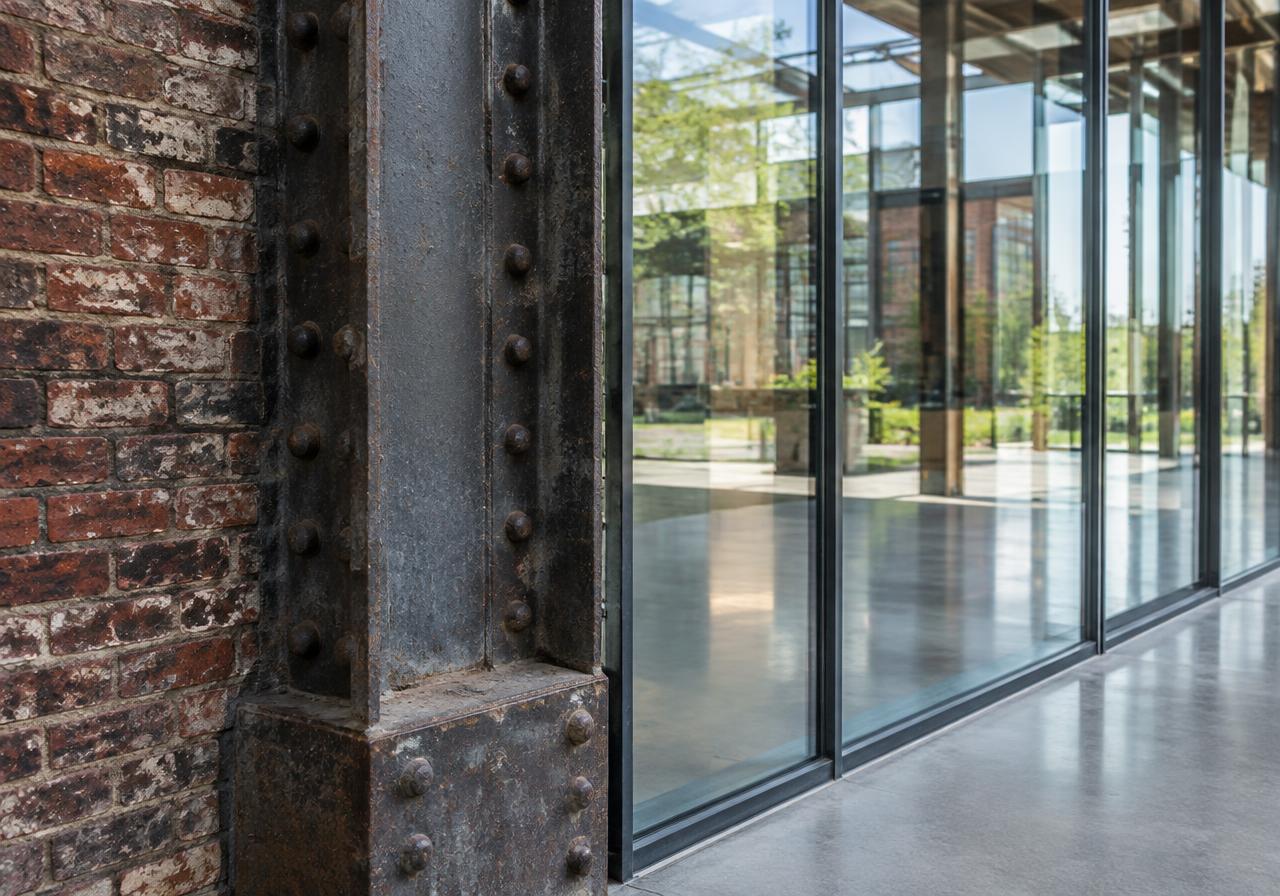
Not every building is from 1924. The Ford plant, Army-era warehouses, later alterations and new construction sit side by side. Treat each building as its own chapter.
Next steps
Sources
For more of Charlotte’s past in its built form, Discover Uptown Charlotte (opens in a new tab) covers the center city’s wards and buildings, and NoDa Living (opens in a new tab) tells the mill-district story.
This article contains no firsthand reviews. Spot an error? Send a correction.
More from the Journal
History
What Adaptive Reuse Means—and What to Notice at Camp North End
A plain-language field guide to old buildings with new jobs.

Creative Life
Taking Photos at Camp North End: Rules and Shoot Planning
Planning portraits or a casual photo walk at Camp North End? Learn when approval is required, what to ask, and how to photograph without blocking access.

Visitor Guides
Camp North End, Charlotte: A Complete First-Time Visitor Guide
How the campus works, what to check before you go, and a simple plan for a first visit.
The North End Edit
Verified local discoveries, in your inbox.